A White Paper on Moving Vascular Plants
from Greenhouse Nurseries to the Open Martian Surface
———————————————
Hardy Grasses, Nitrogen-Fixing Legumes, Fast-Growing Trees,
Root Stabilization, Oxygen Compounding, and the Formation of Real Soil
Abstract
This paper describes the eighth stage of the Mars Habitat Project’s terraforming framework: the introduction of vascular plants to outdoor Martian soil that has been biologically prepared by the microbial and primitive plant colonization of Stage 7. Where cyanobacterial biocrusts, lichens, mosses, and fungal networks have built enough organic matter, fixed enough nitrogen, and retained enough moisture to constitute functional soil, Stage 8 plants the first grasses, legumes, and trees. These are not decorative additions. They are structural and biochemical transformations of the Martian surface.
Hardy grasses send fibrous root systems through the developing soil profile, binding particles mechanically, preventing wind erosion, and creating root channels that improve water infiltration and gas exchange. Nitrogen-fixing legumes — plants that host symbiotic Rhizobium bacteria in root nodules — dramatically accelerate the nitrogen economy of the soil, converting atmospheric N₂ into bioavailable ammonium at rates far exceeding free-living cyanobacterial fixation.
Fast-growing trees introduce vertical structure to the landscape, produce massive biomass above and below ground, cast shade that moderates surface temperature extremes, and drive transpiration cycles that begin to couple the soil water system to the atmosphere. Every generation of growth and decay deposits organic matter into the soil profile, and every centimeter of soil depth represents a compounding investment in the planet’s capacity to support more complex life. Oxygen production, which was locally measurable but globally negligible in Stage 7’s biocrust phase, now compounds with every hectare of photosynthesizing leaf area. This paper details the plant categories deployed, their specific ecological functions, the soil readiness criteria that trigger their introduction, the role of mycorrhizal partnerships in plant survival, the mechanics of root-driven soil formation, the compounding oxygen arithmetic, and the criteria for advancing to Stage 9.
1. Introduction
1.1 What Stage 7 Built
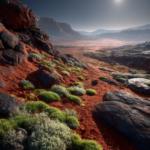
Stage 7 expanded biology from Stage 6’s bounded test zones onto the open Martian surface at landscape scale. Cyanobacteria formed biocrusts that bound mineral particles, fixed nitrogen, added organic carbon, and produced extracellular polysaccharides that improved water retention. Lichens followed, accelerating mineral weathering and deepening the organic layer through acid secretion and biomass accumulation. Mosses established in the most favorable zones, trapping windblown sediment and holding moisture. Below the surface, fungal hyphae began threading through the developing soil, decomposing dead biomass and forming the earliest mycorrhizal networks. The result, in zones where the succession sequence progressed fully, is something that did not previously exist on Mars: soil. Not regolith — not sterile crushed basalt — but a substrate containing organic carbon, bioavailable nitrogen, a living microbial community, fungal hyphae, moisture-retaining structure, and particle aggregation. Thin soil, young soil, fragile soil — but soil. Stage 8 begins in the zones where that soil exists.
1.2 Why Vascular Plants Change Everything
The transition from bryophytes and lichens to vascular plants is the most consequential biological threshold in primary succession. Mosses lack true roots; they absorb water and nutrients across their entire surface. They cannot penetrate deeper than a few centimeters into the substrate. Vascular plants have roots — differentiated organs that grow downward into the soil profile, branching, extending, and physically restructuring the substrate as they go. A single grass plant can produce a root system that extends thirty centimeters or more below the surface, with a total root length measured in kilometers when all branches and root hairs are summed. A tree can send roots meters deep. This root penetration transforms the soil in ways that surface-dwelling organisms cannot: it opens channels for water infiltration and gas exchange, it distributes organic matter at depth through root exudation and root death, it physically binds soil particles through mechanical pressure and through the sticky polysaccharides that root surfaces secrete, and it creates the three-dimensional subsurface architecture that distinguishes mature soil from surface crust over mineral substrate.
Vascular plants also dramatically increase the rate of photosynthetic carbon fixation. A biocrust fixes carbon only at its surface — a thin, two-dimensional layer limited by the area it covers and the density of its photosynthetic cells. A meadow of grass fixes carbon across an entire canopy of upright leaf blades, stacked vertically, with a leaf area index (the ratio of total leaf surface area to ground surface area) that can exceed three or four. A stand of trees can achieve leaf area indices above six. This vertical stacking of photosynthetic surface means that a given area of ground covered by vascular plants fixes carbon — and releases oxygen — at rates many times higher than the same area covered by biocrust alone. Stage 8 is where the oxygen math begins to compound.
1.3 Scope of This Paper
This paper addresses three categories of vascular plants introduced in Stage 8: hardy grasses, nitrogen-fixing legumes, and fast-growing trees. These categories are not chosen for their aesthetic or agricultural value. They are chosen because each performs a specific, essential ecological function that advances the transformation of the Martian surface toward self-sustaining habitability. Grasses stabilize soil. Legumes enrich it. Trees build biomass and vertical structure. Together, they produce the first plant communities on Mars — communities that interact with the soil, the atmosphere, and each other through root systems, mycorrhizal networks, nutrient cycling, and transpiration. The paper describes the ecological function of each category, the criteria for site readiness, the nursery-to-field pipeline, the role of mycorrhizal symbiosis, the mechanics of soil deepening, the oxygen contribution, and the transition criteria for Stage 9.
2. Soil Readiness Criteria
2.1 What Vascular Plants Require
Vascular plants cannot be introduced to any surface that has a biocrust on it. The soil beneath that crust must meet minimum thresholds across multiple parameters before root-dependent organisms can survive. The readiness criteria are not arbitrary — they are derived from the requirements of the least-demanding species in each plant category, validated against the performance data accumulated in the greenhouse nurseries over years of cultivation on Mars regolith substrate. A zone is declared ready for Stage 8 introduction when it meets all of the following criteria simultaneously, sustained over at least two consecutive Martian growing seasons.
Organic carbon content must exceed 0.5 percent by weight in the top ten centimeters of soil. Below this threshold, the soil lacks the carbon-based nutrient cycling and water-retention capacity to support root growth through periods of reduced irrigation. Bioavailable nitrogen (ammonium plus nitrate) must exceed 20 milligrams per kilogram of soil. Below this, plants yellow, fail to establish root systems, and die within weeks of transplant. Soil depth must exceed five centimeters of biologically modified substrate — material containing organic matter, microbial biomass, and fungal hyphae, as distinct from raw regolith beneath. Below five centimeters, roots hit sterile, toxic basalt before they can establish. Water-holding capacity must exceed 15 percent by mass — the soil must retain at least 15 grams of water per 100 grams of dry soil after free drainage. Below this, the interval between irrigation events is too short for root survival. Perchlorate concentration in the root zone must be below 0.01 percent by weight — two orders of magnitude below the raw regolith concentration of 0.4 to 0.6 percent. Above this, perchlorate accumulates in plant tissues to levels toxic to the plant and to anything that eats it. Soil pH must be between 5.5 and 8.5, within the tolerance range of the selected pioneer species. Microbial biomass carbon must exceed 50 micrograms per gram of soil, indicating an active decomposer community capable of recycling nutrients from dead plant material.
2.2 How Readiness Is Measured
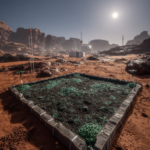
Each colonization zone established in Stage 7 is instrumented with the monitoring architecture described in the Stage 6 white paper: soil chemistry sensors, moisture probes, temperature loggers, and periodic manual sampling for laboratory analysis. The soil readiness assessment is performed at the beginning of each Martian growing season by collecting core samples at standardized depths (0–5 cm, 5–10 cm, 10–20 cm) across a grid within each zone. Organic carbon is measured by loss-on-ignition or elemental analysis. Bioavailable nitrogen is measured by extraction and colorimetric assay. Water-holding capacity is measured by saturating a known mass of soil and weighing after drainage. Perchlorate is measured by ion chromatography. Microbial biomass is estimated by chloroform fumigation-extraction or phospholipid fatty acid analysis. Only zones that meet all criteria across the entire sampling grid are advanced to Stage 8. Zones with patchy results — some grid points passing, others failing — remain in Stage 7 management until the soil develops further.
3. Hardy Grasses: Stabilizing the Surface
3.1 Why Grasses Come First Among Vascular Plants
Grasses are the first vascular plants introduced to Stage 8 zones for the same reason they dominate early succession on Earth: they establish fast, tolerate poor conditions, produce extensive root systems relative to their aboveground biomass, and stabilize soil more efficiently per unit of biological investment than any other growth form. A grass seedling can develop a functional root system within days of germination. Within weeks, that root system has penetrated the full depth of the available soil and begun binding particles through direct mechanical contact and through the secretion of root mucilage — sticky polysaccharides that glue mineral particles to root surfaces and to each other. Within a single growing season, a stand of grass produces a root mat dense enough to hold the soil against wind erosion, which on Mars — with its global dust storms and surface winds capable of saltation and particle mobilization — is a constant threat to the thin soils that Stage 7 built.
3.2 Candidate Species
The grass species selected for Stage 8 introduction are drawn from Earth’s most stress-tolerant lineages — species adapted to drought, cold, alkaline soils, nutrient poverty, and high UV exposure. Rye grasses (Lolium and Secale species) have demonstrated growth on Mars regolith simulants in multiple greenhouse studies and tolerate poor soils, cold temperatures, and short growing seasons. Sand ryegrass (Leymus arenarius), among the first vascular colonizers of the volcanic island Surtsey after its emergence in 1963, demonstrates the capacity to establish on raw mineral substrates with minimal soil development. Blue grama (Bouteloua gracilis) and buffalo grass (Bouteloua dactyloides) are C₄ warm-season grasses adapted to arid, alkaline conditions with exceptional drought tolerance. Festuca species from alpine and Arctic environments tolerate extreme cold, UV exposure, and nutrient-poor substrates. All candidates have been cultivated in the greenhouse nurseries on Mars regolith substrate through multiple generations, and the populations selected for outdoor introduction are those that demonstrated the best performance under progressively hardened conditions.
3.3 What Grass Root Systems Do to Soil
The ecological value of grasses in Stage 8 is almost entirely below ground. A typical perennial grass allocates 60 to 80 percent of its total biomass to roots. These roots perform five functions simultaneously. First, mechanical binding: the sheer density of fine roots — thousands of individual root segments per cubic decimeter of soil — physically holds particles in place against wind and water erosion. Second, organic matter deposition: grass roots exude organic compounds continuously during growth (sugars, amino acids, organic acids), feeding the soil microbial community and adding organic carbon at depth. When roots die — and fine grass roots turn over on annual or sub-annual timescales — their decomposing biomass becomes part of the soil organic fraction. This is the primary mechanism by which organic matter is distributed through the soil profile rather than accumulating only at the surface. Third, water channel creation: as roots grow and then die, they leave behind channels through the soil matrix. These channels improve water infiltration during irrigation events and gas exchange between the soil and the atmosphere, both essential for the aerobic microbial community. Fourth, mycorrhizal hosting: grass roots are among the most prolific hosts for arbuscular mycorrhizal fungi. Every grass plant transplanted from the nursery arrives with its roots already colonized by AM fungi, and as the root system extends through the soil, the fungal network extends with it, connecting the new plant to the soil ecosystem. Fifth, surface roughness: the aboveground portion of the grass canopy slows wind at the surface, reducing the wind’s capacity to detach and transport soil particles. Even a sparse grass cover dramatically reduces wind erosion compared to bare biocrust.
4. Nitrogen-Fixing Legumes: Enriching the Soil
4.1 The Nitrogen Bottleneck
Nitrogen is the element most likely to limit plant growth on Mars. Raw Martian regolith contains no bioavailable nitrogen. Stage 7’s cyanobacteria fixed atmospheric nitrogen into the soil, but free-living cyanobacterial nitrogen fixation rates are low — typically a few kilograms of nitrogen per hectare per year under favorable conditions. This is enough to support biocrusts, lichens, and mosses, but vascular plants require substantially more nitrogen for leaf growth, protein synthesis, and reproduction. Without a major additional nitrogen input, the soil nitrogen capital built by Stage 7 will be rapidly depleted by the first generation of vascular plants, and subsequent growth will be stunted. Legumes solve this problem.
4.2 The Rhizobium Symbiosis
Legumes — plants in the family Fabaceae, including clovers, alfalfa, beans, peas, lupines, and hundreds of other genera — host nitrogen-fixing bacteria of the genus Rhizobium (and related genera including Bradyrhizobium, Mesorhizobium, and Sinorhizobium) in specialized root structures called nodules. The plant provides the bacteria with photosynthetically fixed carbon (sugars) and a low-oxygen environment within the nodule. The bacteria, in return, convert atmospheric N₂ into ammonium (NH₄⁺) using the enzyme nitrogenase — the same fundamental chemistry that cyanobacteria perform, but housed within a dedicated symbiotic organ that operates at far higher efficiency. A well-nodulated legume can fix 100 to 300 kilograms of nitrogen per hectare per year — one to two orders of magnitude more than free-living cyanobacteria on the same area. This nitrogen does not remain locked in the legume. When legume roots die, when leaves fall and decompose, when root nodules senesce and release their bacterial contents, the fixed nitrogen enters the soil pool, where it becomes available to every plant in the community. In agricultural practice on Earth, legumes are grown specifically to enrich soil nitrogen for subsequent crops. On Mars, they serve the same function: they are the nitrogen pumps that convert the soil from nitrogen-limited to nitrogen-sufficient.
4.3 Candidate Species and Deployment
Alfalfa (Medicago sativa) is the primary legume candidate for Stage 8. It has already demonstrated robust growth on bare basaltic Mars regolith simulant in greenhouse experiments, producing substantial biomass without added nutrients. When alfalfa biomass was used as a soil amendment, turnip yield increased 190 percent, radish yield increased 311 percent, and lettuce yield increased 79 percent compared to unamended simulant. Alfalfa’s deep taproot (exceeding one meter on Earth) penetrates further into the soil profile than any grass, delivering organic matter and fixed nitrogen to depth. Its tolerance for alkaline soils, drought, and cold makes it well-suited to Martian conditions. White clover (Trifolium repens) provides a low-growing, spreading ground cover that fills gaps between grass tussocks, fixes nitrogen at the surface, and tolerates close grazing and trampling. Lupines (Lupinus species) are adapted to acidic and nutrient-poor sandy soils and produce large quantities of biomass that, when incorporated, dramatically improves soil organic matter. Each legume species is inoculated with its specific Rhizobium partner in the greenhouse nursery before transplant, ensuring that functional nodules are already forming by the time the plant reaches outdoor soil.
5. Fast-Growing Trees: Vertical Structure and Biomass
5.1 Why Trees Matter
Trees are the largest biological structures on Earth, and their introduction in Stage 8 represents the most visible and structurally transformative step in the colonization sequence. A single mature tree can contain hundreds of kilograms of carbon in its trunk, branches, and roots — carbon that was atmospheric CO₂ before the tree fixed it. A stand of trees contains tons of carbon per hectare. This biomass is not ephemeral like grass or biocrust, which turn over on annual or sub-annual timescales. Tree trunks persist for decades to centuries, representing long-term carbon storage that permanently removes CO₂ from the atmosphere. When trees eventually die and decompose, their massive root systems leave behind organic matter distributed through the entire depth of the soil profile, and their trunk and branch material becomes the coarse woody debris that feeds decomposer communities for years.
Trees also modify the microclimate around them. Their canopy casts shade, reducing surface temperature extremes: cooler in the day, warmer at night, because the canopy reduces radiative heat loss. Their transpiration — the evaporation of water from leaf surfaces, drawn upward through the plant from the roots — humidifies the air within and downwind of the canopy. On Earth, forests create their own rainfall through transpiration-driven moisture recycling. On Mars, the effect will be far more modest, but any increase in near-surface humidity reduces the desiccation stress on every other organism in the vicinity: biocrusts, lichens, mosses, grasses, legumes, soil microorganisms. Trees create gentler conditions around themselves, and those gentler conditions benefit the entire community.
5.2 Candidate Species
The trees introduced in Stage 8 are not the towering conifers or hardwoods of mature terrestrial forests. They are fast-growing, stress-tolerant pioneer species selected for rapid biomass production under harsh conditions. Willows (Salix species) are among the fastest-growing woody plants on Earth, capable of producing meters of new growth per year under favorable conditions. They tolerate waterlogged soils, cold temperatures, and poor substrates. Dwarf willow (Salix herbacea) was among the early woody colonizers of Surtsey and grows in Arctic and alpine environments where no other tree can survive. Poplars and aspens (Populus species) grow rapidly, reproduce vegetatively through root suckering (producing clonal stands from a single parent), tolerate cold and poor soils, and have been extensively studied for phytoremediation of contaminated substrates. Birches (Betula species) are pioneer trees of boreal and Arctic environments, tolerant of cold, nutrient-poor soils, and UV exposure. Alder (Alnus species) is a nitrogen-fixing tree — it hosts the actinobacterial symbiont Frankia in root nodules, performing the same function as Rhizobium in legumes, but in a woody perennial that produces decades of continuous nitrogen input while simultaneously building massive root and trunk biomass.
5.3 Root Architecture and Deep Soil Formation
Tree root systems operate at a scale qualitatively different from grasses. Where grass roots create a dense, shallow mat, tree roots create a deep, branching scaffold. The taproot or sinker roots of a young tree penetrate vertically through the soil profile, pushing into substrate that no other organism has modified. As these deep roots grow, die, and decompose, they create organic matter deposits and water channels at depths of 50 centimeters, one meter, two meters — depths that no biocrust, no moss, no grass root has reached. This is how real soil depth forms. The organic matter deposited by deep roots attracts microbial colonization, which further decomposes root material and weathers the surrounding mineral substrate. Over successive generations of tree growth, the biologically active zone of the soil extends progressively deeper, converting raw regolith into soil from the top down. On Earth, mature forest soils can exceed one to two meters in depth, developed over centuries of root-driven soil formation. On Mars, the process will be slower, but the mechanism is the same: trees are the organisms that build deep soil, and deep soil is what makes a planet’s surface permanently habitable.
6. Mycorrhizal Integration
6.1 Every Plant Arrives with Its Partner
No vascular plant is introduced to the Martian surface without its mycorrhizal fungal partner. This is not a preference; it is a requirement. On Earth, experiments consistently show that plants grown without mycorrhizal associations in nutrient-poor soils perform dramatically worse than those with intact fungal partnerships: lower nutrient uptake, reduced drought tolerance, weaker disease resistance, smaller root systems, lower survival rates. On Mars, where the soil is younger, poorer, and more hostile than any terrestrial substrate, the mycorrhizal association is the difference between survival and death for most transplanted species. The greenhouse nursery inoculates every plant with appropriate AM or EM fungi during the seedling stage, verifies colonization by microscopic examination of root samples, and only releases plants for outdoor transplant when mycorrhizal colonization rates exceed 50 percent of root length.
6.2 Network Expansion Through Plant Introduction
Each new plant transplanted to a Stage 8 zone carries its mycorrhizal fungal partner into the soil. As the plant’s root system grows and the associated fungal hyphae extend through the surrounding substrate, the new fungal mycelium encounters and may fuse with the mycelium associated with neighboring plants. Over time, the individual plant-fungus associations merge into a continuous common mycorrhizal network connecting multiple plants of the same or different species. Through this network, resources flow: carbon from plants with surplus photosynthate to plants in shade or stress, phosphorus from fungal hyphae accessing mineral sources to plant roots that cannot reach those sources, nitrogen from legume-associated soil pools to grasses and trees connected through the shared fungal infrastructure. The network does not merely connect plants. It creates a cooperative system in which the performance of each individual is enhanced by the performance of the community. Seedlings establishing in the shade of mature plants, which on their own might starve for light, survive because the mycorrhizal network subsidizes them with carbon from their sunlit neighbors. This is how forests establish: not as collections of competing individuals, but as connected communities supported by underground fungal infrastructure.
7. The Oxygen Arithmetic
7.1 From Signal to Contribution
In Stage 7, cyanobacterial photosynthesis produced oxygen that was locally measurable above active biocrust zones but globally negligible. Stage 8 changes the arithmetic. A hectare of biocrust might fix 0.5 to 2 tonnes of carbon per year, releasing a proportional quantity of oxygen. A hectare of grassland fixes 2 to 8 tonnes. A hectare of young fast-growing forest fixes 5 to 15 tonnes. Each tonne of carbon fixed releases approximately 2.67 tonnes of oxygen. As Stage 8 zones expand from hectares to tens of hectares to hundreds, and as the vegetation shifts from biocrust to grass to mixed grass-legume-tree communities, the total photosynthetic oxygen output multiplies. The compounding is driven by two factors: the increasing area of vegetated surface (horizontal expansion), and the increasing productivity per unit area as the vegetation matures and diversifies (vertical intensification).
7.2 Compounding Through Growth and Decay
Photosynthesis is only half the oxygen equation. When organic matter decomposes, it consumes oxygen. A plant that fixes one tonne of carbon and then completely decomposes releases that carbon back to CO₂ and consumes the oxygen that was produced. The net oxygen contribution of a biological system depends on how much organic carbon is buried or stored rather than decomposed. On Earth, the reason the atmosphere contains 21 percent oxygen is not that plants produce it faster than decomposition consumes it on short timescales — the two rates are nearly balanced. The reason is that over geological time, a small fraction of organic carbon produced by photosynthesis was buried in sediments before it could decompose, and the oxygen that corresponded to that buried carbon accumulated. On Mars, the same principle applies. Every gram of organic carbon that enters the soil profile and remains there — incorporated into stable humic compounds, bound to mineral surfaces, buried beneath new deposits of organic matter — represents a net transfer of oxygen from CO₂ to the atmosphere. Stage 8’s deepening soil is therefore not merely a biological achievement. It is an oxygen bank: the organic carbon stored in the growing soil profile represents oxygen that has been permanently released. The deeper the soil grows, the more oxygen the atmosphere retains.
7.3 Integration with Stage 4
Stage 4’s atmospheric engineering continues throughout Stage 8, thickening the atmosphere through volatile release and greenhouse gas management. The biological oxygen from Stage 8 adds to this engineered atmospheric budget. At this point in the framework, the two processes become synergistic: Stage 4 provides the atmospheric mass that shields biology from radiation and maintains surface temperatures compatible with liquid water and plant growth. Stage 8’s biology produces oxygen that incrementally changes the atmospheric composition within that thickening envelope. Neither process alone transforms the atmosphere on human timescales. Together, they represent a compounding trajectory — more atmosphere enables more biology, which produces more oxygen, which enriches the atmosphere, which enables more biology. The trajectory is slow, measured in decades per percentage point of atmospheric oxygen. But it is a trajectory, not a plateau, and it accelerates as the vegetated surface area grows.
8. The Formation of Real Soil
8.1 What Distinguishes Soil from Regolith
Mars has always had regolith — a surface layer of broken, weathered mineral material produced by impact fragmentation, thermal cycling, and aeolian abrasion. What Mars has never had, in any known geological epoch, is soil. Soil is not merely broken rock. Soil is a living system: a matrix of mineral particles, organic matter, water, air, and a biological community of microorganisms, fungi, invertebrates, and plant roots, all interacting through chemical, physical, and biological processes that cycle nutrients, store water, exchange gases with the atmosphere, and support plant growth. The transition from regolith to soil is the transition from geology to ecology, and Stage 8 is where that transition becomes unmistakable.
8.2 The Soil Profile Develops
On Earth, soil scientists describe the soil profile as a series of horizons — layers that develop over time as biological and chemical processes modify the original mineral substrate from the surface downward. The O horizon is the surface layer of fresh and decomposing organic matter: leaf litter, dead roots, microbial biomass. The A horizon is the topsoil: mineral material thoroughly mixed with organic matter by biological activity, darkened by humic substances, structured into aggregates by EPS, fungal hyphae, and root pressure. The B horizon is the subsoil: mineral material that has been chemically altered by water percolating through the A horizon, carrying dissolved organic acids and mineral ions downward. The C horizon is the parent material: unmodified mineral substrate. On Mars, Stage 8 begins the development of this profile. The O horizon is supplied by the litter of dead grass leaves, legume residues, and decomposing biocrust material accumulating at the surface. The A horizon forms as grass and legume roots distribute organic matter through the top ten to twenty centimeters and soil organisms mix it with mineral particles. Tree roots begin extending the biologically active zone toward a developing B horizon. The C horizon is raw regolith — perchlorate-reduced but otherwise unmodified — awaiting the downward advance of biological soil formation.
8.3 The Rate of Soil Formation
On Earth, soil formation from bare mineral substrate proceeds at rates of approximately 0.1 to 1 millimeter per year under natural conditions, with the rate depending on climate, parent material, topography, biological activity, and time. The fastest rates occur in warm, wet climates with high biological productivity; the slowest in cold, dry climates with sparse vegetation. Mars, even after Stage 4’s atmospheric improvements, is a cold, dry planet with a short growing season and low biological productivity compared to terrestrial ecosystems. The soil formation rate on Mars will be at the slow end of the terrestrial range — perhaps 0.1 millimeter per year in the most productive zones, and less in marginal areas. At this rate, building one centimeter of soil takes a century. Building the tens of centimeters needed to support mature forest takes millennia. This is not a problem to be solved. It is a reality to be accepted. The framework does not promise fast transformation. It promises a trajectory: each year, the soil is deeper than the year before. Each decade, the biologically active zone has advanced further into the regolith. Each century, the Martian surface is more capable of supporting complex life than it was at the beginning of the century. The patience required is geological, and the reward is planetary.
9. Continuity with All Prior Stages
Stage 8 draws on every prior stage simultaneously. Stage 1’s instruments continue providing environmental monitoring data that guides the selection and management of colonization zones. Stage 2’s shielding protects the settlement and the biological nurseries from the most energetic radiation events. Stage 3’s greenhouses, now fully operational nurseries, propagate every grass plug, legume seedling, and tree sapling that is transplanted to the outdoor surface, inoculated with mycorrhizal fungi and hardened through acclimation protocols. Stage 4’s atmospheric thickening continues to improve the radiation environment, extend the daily window of liquid water stability, and increase the partial pressures of CO₂ and N₂ available for photosynthesis and nitrogen fixation. Stage 5’s water liberation feeds the irrigation systems that sustain outdoor plant communities through dry periods. Stage 6’s test zones continue as long-term ecological reference sites. Stage 7’s biocrusts, lichens, mosses, and microbial communities continue operating across the colonized surface, maintaining soil structure and nutrient cycling in zones not yet advanced to vascular plant introduction.
The feedback loops between stages intensify in Stage 8. More vegetation means more transpiration, which means more atmospheric moisture, which means more precipitation potential — supporting Stage 4’s atmospheric goals. More root systems mean more soil stability, which means less dust mobilization, which means more consistent solar radiation reaching the surface — benefiting every photosynthetic organism. More organic matter in the soil means more water retention, which means more efficient use of Stage 5’s liberated water. More photosynthesis means more oxygen, incrementally enriching the atmosphere that Stage 4 is building. The stages are not sequential steps to be completed and left behind. They are concurrent systems that amplify each other, and Stage 8 is the stage where that amplification becomes a defining feature of the framework.
10. Criteria for Advancing to Stage 9
Stage 9 — Complex Ecosystem Development — begins when the biological colonization of Stage 8 has matured sufficiently to support the introduction of more complex and interdependent biological communities. The specific criteria are as follows. At least one colonization zone must demonstrate a self-sustaining grass-legume-tree community that has persisted through a minimum of five consecutive Martian growing seasons without requiring reintroduction of failed species. Soil depth in that zone must exceed ten centimeters of biologically active A-horizon material across at least 80 percent of the zone area. Organic carbon content in the A horizon must exceed 1.5 percent by weight. Bioavailable nitrogen must exceed 50 milligrams per kilogram of soil, with demonstrated nitrogen cycling (both fixation and mineralization measurably occurring). Mycorrhizal network connectivity must be confirmed by demonstrating that newly transplanted seedlings achieve mycorrhizal colonization from soil-resident fungi within one growing season without nursery pre-inoculation — indicating that the soil itself contains a functional fungal community capable of recruiting new partners. Oxygen concentration at two meters above the vegetated surface must be measurably elevated relative to background atmospheric levels, confirmed by continuous monitoring over at least one full Martian year.
These criteria are stringent because Stage 9 introduces organisms and interactions that depend on a functioning plant community and a mature soil ecosystem. Advancing prematurely risks the collapse of Stage 9 introductions and the waste of biological resources that took years to produce in the nurseries. The framework’s governing principle holds: you do not scale what you have not proven. Stage 8’s proof is a piece of Martian ground that grows plants, cycles nutrients, retains water, hosts a connected underground fungal network, and produces measurable oxygen — a piece of ground that is, by any reasonable definition, alive. When that proof exists, Stage 9 begins.
11. Discussion
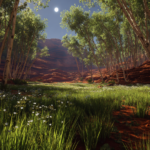
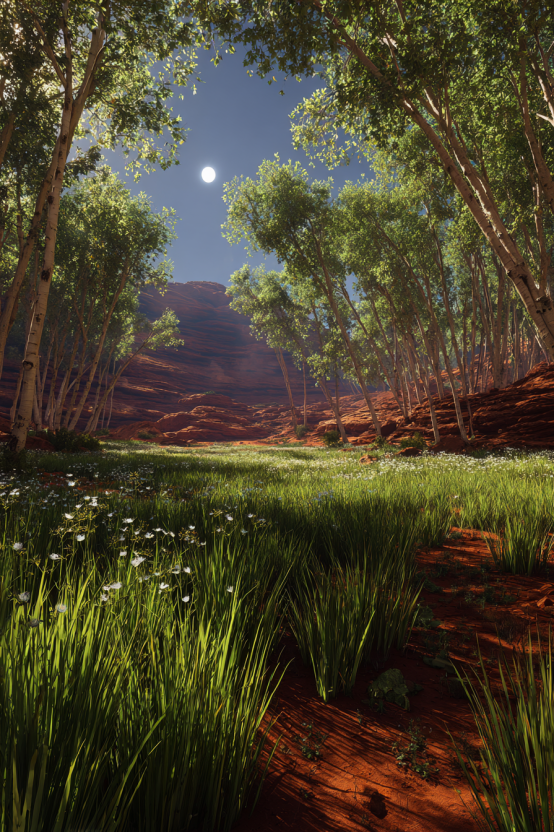
Stage 8 is the stage where Mars begins to look different. Every prior stage produced changes that were invisible from orbit or measurable only by instruments: atmospheric thickening, water liberation, soil chemistry changes, microbial colonization, biocrust darkening. Stage 8 produces green. Grass. Leaves. Canopy. Visible plant life growing on the open surface of another planet. This visibility matters not because appearance is the goal — the goal is ecological function — but because it represents a qualitative threshold. A planet with visible vegetation is a planet where photosynthesis is occurring at a scale that transforms the surface albedo, the moisture cycle, the carbon cycle, and the oxygen budget. It is a planet where the biological process has advanced beyond the microbial foundation and begun building the structural and biochemical complexity of a terrestrial ecosystem.
The honest assessment is that Stage 8 is measured in generations, not years. Soil formation at fractions of a millimeter per year. Tree growth from sapling to structural maturity over decades. Mycorrhizal network development from isolated plant-fungus pairs to a continuous underground web over similar timescales. The compounding of oxygen production from barely measurable to atmospherically significant over centuries. No one alive when the first grass plug is transplanted to Martian soil will see the mature forest that their great-grandchildren might walk through. This is the temporal scale on which planetary transformation operates, and it requires a commitment that transcends individual human lifespans. The framework accepts this. Each generation inherits a planet slightly more habitable than the one their parents worked on, and passes a planet slightly more habitable to their children. The soil deepens. The oxygen accumulates. The biology compounds. That is enough.
12. Conclusion
Stage 8 of the Mars Habitat Project introduces vascular plants to the outdoor Martian surface: hardy grasses that stabilize soil with dense root systems, nitrogen-fixing legumes that enrich the soil’s nitrogen economy through Rhizobium symbiosis, and fast-growing pioneer trees that build massive biomass and drive soil formation to depth through deep root penetration. Every plant arrives from the greenhouse nursery pre-inoculated with mycorrhizal fungi, and as root systems extend and fungal networks merge, the individual organisms connect into cooperative communities supported by underground infrastructure. Oxygen production compounds with every generation of growth and decay, every hectare of expanding vegetation, and every centimeter of carbon-storing soil depth. The soil itself — the living, structured, biologically active substrate that distinguishes a habitable surface from a mineral wasteland — deepens year by year, converting Martian regolith into something that no Martian geology ever produced: earth.
The word is deliberate. Soil scientists on Earth call it earth. Lowercase, common noun. The organic, mineral, living matrix in which plants root and from which ecosystems grow. Mars has never had earth. After Stage 8, it begins to. The process is slow. The process is compounding. The process is the same process that built every terrestrial soil on the planet we came from, applied with intention and patience to the planet we are learning to inhabit. Stage 9 will describe what happens when that earth is deep enough and rich enough to support complex ecosystems: diverse plant communities, nutrient webs, and the biological interactions that characterize a mature, self-sustaining biosphere. But Stage 9 depends entirely on what Stage 8 builds, one root at a time, one season at a time, one millimeter of soil at a time.
References
Bernhardt, P. (2025). Biological approaches to Martian soil remediation: Azospira oryzae perchlorate reduction in MGS-1 simulant. University of Nebraska-Lincoln.
Brundrett, M.C. (2009). Mycorrhizal associations and other means of nutrition of vascular plants. New Phytologist, 183(4), 677–681.
Frew, A. et al. (2025). Mycorrhizal networks: Understanding hidden complexity. Functional Ecology, 39(7).
Kasiviswanathan, P. et al. (2022). Farming on Mars: Treatment of basaltic regolith soil and briny water simulants sustains plant growth. PLoS ONE, 17(8), e0272209.
Lehmann, A. et al. (2025). Meta-analysis of effects of common mycorrhizal networks formed by arbuscular mycorrhizal fungi. Functional Ecology, 39(13).
Rosado, A.S. et al. (2025). The role of extremophile microbiomes in terraforming Mars. Communications Biology, 8, 1588.
Santos, M.V. et al. (2025). Cyanobacteria and soil restoration: Bridging molecular insights with practical solutions. Microorganisms, 13(7), 1468.
Smith, S.E. & Read, D.J. (2008). Mycorrhizal Symbiosis, 3rd ed. Academic Press.
Van der Heijden, M.G.A. et al. (2015). Mycorrhizal ecology and evolution: The past, the present, and the future. New Phytologist, 205, 1406–1423.
Verseux, C. et al. (2021). Sustainable use of Mars resources for cyanobacterium-based life support. Frontiers in Microbiology, 12, 611798.
Wamelink, G.W.W. et al. (2014). Can plants grow on Mars and the Moon: A growth experiment on Mars and Moon soil simulants. PLoS ONE, 9(8), e103138.