A White Paper on Enclosed Habitats, Greenhouses,
and the Contained Science of Learning to Live on Mars
———————————————
Pressurized Habitats, Research Greenhouses, Regolith Remediation,
and the Principle That Nothing Leaves the Walls Until It Is Understood
Abstract
This paper examines the third stage of the Mars Habitat Project’s ten-stage terraforming framework: the arrival of human beings on Mars and their establishment within pressurized enclosed habitats and research greenhouses. Stage 3 is the transition from robotic exploration to human presence, but it is emphatically not the beginning of terraforming. It is the beginning of learning to terraform. Greenhouses in this stage serve double duty: they sustain the human population through food and oxygen production, and they function as the most important research laboratories in the solar system.
Within their walls, scientists conduct the first experiments with actual Martian regolith under controlled conditions — testing which organisms survive, which bacteria and processes break down perchlorates, how water behaves under Martian gravity and pressure differentials, how the 24-hour-39-minute Martian sol affects plant circadian rhythms, and what it takes to transform sterile rock dust into living soil.
Every experiment is contained, monitored, and documented. Nothing biological leaves those walls until its effects are fully understood. This paper presents the science behind habitat design, greenhouse engineering, regolith remediation, and contained biological research, and argues that Stage 3 is where humanity builds the knowledge base that makes every subsequent stage possible.
1. Introduction
1.1 The Moment Everything Changes
The first two stages of the Mars Habitat Project framework are conducted entirely by machines and signals. Robots explore. Instruments measure. Data is transmitted across hundreds of millions of kilometers to be interpreted by human minds on Earth. Stage 3 is the rupture: human beings arrive on Mars, and with them comes something no robot can replicate — the capacity for adaptive experimentation. A rover follows instructions. A human scientist observes something unexpected, adjusts the experiment, and asks a question no one on Earth anticipated. This capacity is the reason Stage 3 exists.
Stage 3 does not begin the transformation of Mars. It begins the education of the species attempting the transformation. The habitats and greenhouses of this stage are classrooms, laboratories, and nurseries. They are the environments in which humanity learns, through direct experience with Martian materials under Martian conditions, what is possible, what is dangerous, and what must be redesigned before any wider ecological intervention is attempted.
1.2 The Containment Principle
The defining operational principle of Stage 3 is absolute containment. Every biological organism, every chemical process, every experiment involving regolith, water, or atmosphere occurs inside sealed, pressurized, monitored environments. Nothing leaves the walls until its effects are fully understood. This is not merely a precaution. It is a recognition that Mars is the only pristine planetary laboratory humanity has access to, and that contaminating it with terrestrial biology before completing the necessary research would compromise both the science and the future terraforming effort.
Containment also serves a practical function. Martian surface conditions — near-vacuum atmospheric pressure, extreme cold, intense radiation, toxic perchlorates — would kill most terrestrial organisms in minutes. The greenhouses are not optional amenities; they are the minimum viable environment for any biological activity. But the discipline of containment extends beyond survival. It means that even organisms capable of surviving Martian conditions are not released until the cascading effects of their presence in the Martian environment have been modeled, tested in analog conditions, and evaluated against the long-term objectives of the terraforming framework.
1.3 Scope of This Paper
This paper is organized in six sections. First, the engineering requirements and design principles for pressurized Martian habitats. Second, the design and function of research greenhouses. Third, the central scientific challenge of regolith remediation — transforming toxic, sterile rock dust into material capable of supporting biological life. Fourth, the behavior of water under Martian conditions and its management within enclosed systems. Fifth, the effects of Martian light and day-length on plant growth and circadian biology. Sixth, the research priorities that define Stage 3 and how they inform the subsequent stages of the framework.
2. Pressurized Habitats: Engineering the Minimum Viable Human Environment
2.1 The Fundamental Challenge
A human habitat on Mars must solve, simultaneously, a set of engineering problems that do not occur together anywhere on Earth: maintaining atmospheric pressure in a near-vacuum external environment, shielding occupants from ionizing radiation without a protective magnetosphere or thick atmosphere, insulating against temperature extremes ranging from -153°C to +20°C, providing breathable air from an atmosphere that is 95.3% carbon dioxide, supplying water from subsurface ice deposits contaminated with perchlorates, and generating sufficient power for all of these systems in a location where solar intensity is roughly 43% of Earth’s at the equator.
No single technology solves all of these problems. The habitat is an integrated system in which structural engineering, atmospheric management, radiation shielding, thermal control, water processing, and power generation must function together continuously and redundantly. Failure of any single system is potentially fatal, and resupply from Earth requires a minimum of six months of transit during optimal launch windows that occur only every 26 months.
2.2 Structural Design: Pressure Vessels on Another World
Earth greenhouses and buildings resist gravity and weather. Martian habitats must resist internal pressure. At Earth-standard atmospheric pressure (101.3 kPa), a habitat wall bears approximately 10 tonnes of outward force per square meter. This is the dominant structural load — far exceeding the modest gravitational loads in Mars’s 38% gravity. Every wall, window, seal, airlock, and connection point is a potential failure point in this pressure vessel.
Research and design competitions (including NASA’s 3D-Printed Habitat Challenge) have converged on several promising approaches. Inflatable structures offer the most favorable mass-to-volume ratio for transport from Earth. A folded inflatable module can be launched in a compact configuration and expanded on the surface to provide hundreds of cubic meters of pressurized volume. Studies have demonstrated that an inflatable pressurized to 500 millibars (half Earth atmospheric pressure) could support up to 6 meters of regolith deposited on top for radiation shielding — the internal pressure literally holds the ceiling up.
Reduced-pressure habitats represent a significant design trade-off. Plants can grow at pressures as low as 100 to 300 millibars (10 to 30% of Earth’s surface pressure) if the atmosphere is oxygen-enriched, and experiments have confirmed that lettuce, green beans, and other crops can develop under such conditions, although evapotranspiration rates increase and water management becomes more complex. A lower internal pressure dramatically reduces the structural demands on the habitat, decreasing material requirements, transport mass, and the consequences of small punctures or leaks. However, humans require a minimum of approximately 500 millibars for comfort and safety, meaning that greenhouse sections could potentially operate at lower pressures than crew habitation sections, connected by airlocks.
2.3 Radiation Shielding
Without a global magnetic field and with an atmosphere providing less than 1% of Earth’s radiation shielding, the Martian surface receives approximately 0.67 millisieverts per day of ionizing radiation from galactic cosmic rays and solar energetic particles. Over an 18-month surface stay, an unshielded astronaut would accumulate approximately 1.2 sieverts — exceeding NASA’s career limit of 1 sievert and significantly elevating lifetime cancer risk.
The most mass-efficient shielding available on Mars is the regolith itself. Studies indicate that approximately 1 meter of packed Martian regolith reduces radiation doses to levels compatible with long-duration habitation, and 2 meters provides shielding roughly equivalent to Earth’s atmosphere. Habitat designs that bury or cover inflatable structures with regolith therefore serve double duty: the regolith provides both radiation shielding and thermal insulation. NASA’s Mars Ice Home concept uses a double-walled structure filled with water ice, exploiting the high hydrogen content of water for cosmic ray absorption while allowing natural light to penetrate the translucent ice walls. Polyethylene — a common plastic rich in hydrogen — has also been shown to be more effective per unit mass at radiation shielding than aluminum, and could be manufactured from Martian methane via ISRU processes.
The localized magnetic dome described in Stage 2 of this framework would supplement physical shielding, potentially reducing the required regolith thickness and allowing larger window areas and more natural light within habitats — a significant factor for crew psychological health during multi-year stays.
2.4 Power Generation
All habitat systems depend on continuous power. Solar power on Mars provides approximately 590 watts per square meter at the equator (compared to approximately 1,361 W/m² at Earth’s orbital distance), and this is further reduced by atmospheric dust, seasonal variation, and periodic global dust storms that can reduce sunlight by 99% for weeks. Solar panels remain viable for supplementary power but are insufficient as a sole source for habitats requiring hundreds of kilowatts of continuous power for life support, atmospheric processing, greenhouse lighting, water extraction, and heating.
Nuclear power is the consensus baseline for Martian habitats. NASA’s Kilopower project demonstrated a compact fission reactor producing 1 to 10 kilowatts of electrical power from a uranium-235 core, designed to operate on planetary surfaces for 10 or more years with no maintenance. Multiple Kilopower units or a larger fission reactor in the 40 to 100 kilowatt range could provide the base load for a settlement of the size envisioned in Stage 3. The MarsGarden concept study based its greenhouse design on nuclear reactor power, recognizing that consistent energy supply regardless of season, dust storms, or time of day is essential for maintaining the biological systems within.
3. Research Greenhouses: Laboratories Disguised as Gardens
3.1 Dual Purpose by Design
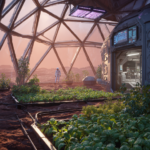
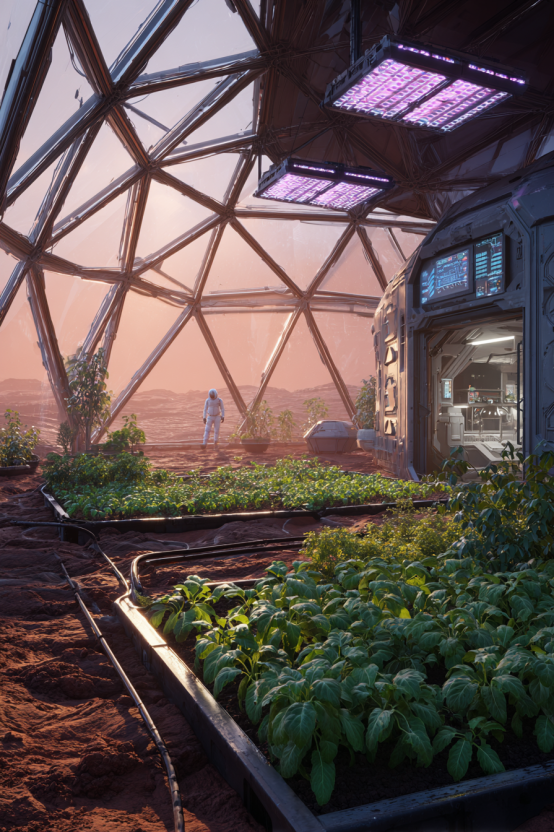
The greenhouses of Stage 3 are not farms. They are not recreational gardens. They are the most important biological research facilities ever constructed, operating in conditions that cannot be replicated anywhere on Earth. Their primary function is to sustain the human population through food production and atmospheric recycling — converting carbon dioxide to oxygen through photosynthesis, producing edible biomass, and recycling water through plant transpiration. Their secondary function, and the one that justifies the enormous cost of their construction, is research.
Every plant grown in a Stage 3 greenhouse is a data point. Every crop cycle is an experiment. Every interaction between a terrestrial organism and Martian regolith, Martian water, Martian light conditions, and Martian gravity is a measurement that cannot be obtained any other way. The question these greenhouses are designed to answer is not Can we grow food on Mars? (hydroponics can achieve that in any pressurized, lit, heated space). The question is: Can Martian materials be transformed into a self-sustaining biological system? The answer to that question determines whether Mars can ever support open ecosystems, and it can only be obtained through direct experimentation with real Martian regolith, real Martian water, and real Martian conditions.
3.2 Greenhouse Architecture
Greenhouse design for Mars must balance competing demands: maximum light transmission for plant growth versus maximum radiation shielding for plant (and researcher) health; maximum volume for crop area versus minimum structural material for transport; atmospheric control for plants versus atmospheric compatibility for human workers.
NASA’s research into Martian greenhouses has explored inflatable transparent structures, buried greenhouses with LED or fiber-optic lighting, and hybrid designs using mirrors and light concentrators to channel sunlight into shielded growing areas. The hybrid approach appears most promising for Stage 3: transparent side walls allow natural Martian sunlight to reach plants during the day (Mars receives sufficient photosynthetically active radiation for plant growth, particularly at equatorial and mid-latitudes), while a regolith-covered roof provides overhead radiation shielding against the highest-energy cosmic ray particles that arrive at steep angles. Supplementary LED lighting, tuned to the specific wavelengths most efficiently absorbed by chlorophyll (red at 660 nm and blue at 450 nm), extends the photoperiod and compensates for dust storms and seasonal light reduction.
NASA’s Veggie and Advanced Plant Habitat systems aboard the International Space Station have demonstrated that LED-grown crops can match or exceed the nutritional quality of field-grown equivalents in microgravity, validating the core technology for closed-environment plant production. The MarsGarden concept, designed by an international team and published in Acta Astronautica, demonstrated a complete greenhouse system capable of providing 2,700 calories per day per crew member through hydroponic cultivation, integrating food production, atmospheric recycling, and water management into a closed-loop system powered by nuclear energy.
3.3 The Research Program: What These Greenhouses Must Determine
The experiments conducted in Stage 3 greenhouses are not academic exercises. Their results directly determine the feasibility and design of Stages 4 through 10. The critical research areas include:
Regolith as a growth medium: Can Martian regolith, after remediation, support root-anchored plant growth? What nutrients must be added? What is the minimum organic matter content required for a regolith-soil transition? How do plants physically interact with the angular, basaltic particles of regolith versus the rounded, weathered particles of terrestrial soil?
Perchlorate bioremediation: Which biological and chemical processes most effectively reduce perchlorates to harmless chloride and oxygen? At what rate? At what scale? Can the process be self-sustaining, or does it require continuous inputs?
Water chemistry and cycling: How does Martian-sourced water (melted from perchlorate-contaminated ice) behave in a closed biological system? What filtration, treatment, and cycling infrastructure is needed to maintain water quality for both plants and human consumption?
Atmospheric management: What is the optimal greenhouse atmosphere for plant growth on Mars? Can the CO₂-rich Martian atmosphere, after pressurization and supplementation with nitrogen and oxygen, serve as a greenhouse atmosphere directly? What are the gas exchange rates between plant transpiration, human respiration, and atmospheric processing systems?
Light and circadian biology: How do plants respond to the 24-hour, 39-minute Martian sol? Does the 39-minute daily drift relative to Earth’s 24-hour cycle affect circadian gene expression, flowering triggers, or growth rates over weeks and months?
Gravity effects: Mars’s 38% gravity has never been tested on long-duration plant growth. How does reduced gravity affect root architecture, water transport through xylem and phloem, nutrient uptake, seed development, pollination mechanics, and structural strength of stems? These experiments cannot be conducted on Earth or the ISS (which provides microgravity, not partial gravity).
Biological soil building: Can the transition from sterile regolith to living soil be initiated and sustained under Martian conditions? What organisms — bacteria, fungi, and other decomposers — are needed to establish the biological cycles that create soil structure, nutrient cycling, and water retention?
4. The Regolith Problem: Turning Poison into Soil
4.1 What Martian Regolith Is
Martian regolith is not soil. Soil is a living system: a matrix of mineral particles, organic matter, water, air, and billions of organisms per gram engaged in continuous cycles of decomposition, nutrient transformation, and structural engineering. Martian regolith is ground rock — the product of billions of years of meteorite impacts, volcanic activity, wind erosion, and chemical weathering, with zero biological input. It is coarse-grained, basaltic, angular, devoid of organic matter, and contaminated with perchlorates at concentrations approximately ten times the threshold considered safe for human exposure on Earth.
The regolith simulant MGS-1 (Mars Global Simulant), developed from Curiosity rover data and commercially produced by Space Resource Technologies, replicates the physical and chemical properties of average Martian basaltic soil. It consists of anorthosite (27.1%), glass-rich basalt (22.9%), bronzite (20.3%), olivine (13.7%), magnesium sulphate (4.0%), ferrihydrite (3.5%), hydrated silica (3.0%), magnetite (1.9%), anhydrite (1.7%), ferrous carbonate (1.4%), and hematite (0.5%). It contains no organic matter, no nitrogen in bioavailable forms, and no phosphorus in the concentrations required for plant nutrition. Experiments using MGS-1 have confirmed that untreated regolith produces poor seed germination and stunted plant development.
However, and critically, regolith is not worthless. It contains the mineral foundation of soil: silicates, iron oxides, sulfates, and trace elements. What it lacks is biology. The transformation from regolith to soil is not a chemical problem (add fertilizer) but a biological one (establish living systems that create and maintain soil structure, nutrient cycling, and water retention). That biological transformation is the central research objective of Stage 3.
4.2 The Perchlorate Barrier
Perchlorates (ClO₄⁻) are the primary chemical obstacle to using Martian regolith for biological purposes. Detected at all landing sites where measurements have been taken, perchlorates are estimated at approximately 0.6% by weight in the regolith, present as a mixture of calcium and magnesium perchlorate salts. Perchlorates are potent oxidizers toxic to humans (they inhibit thyroid iodine uptake, disrupting hormone production, with particularly severe effects on fetal development), toxic to most plants (they bioaccumulate in plant tissue, making crops grown in untreated perchlorate-contaminated soil unsafe to eat), and corrosive to equipment.
Perchlorates are also, paradoxically, a resource. The reduction of perchlorate to chloride releases oxygen — the same element that MOXIE demonstrated could be extracted from the CO₂ atmosphere. A biological or catalytic perchlorate remediation system is simultaneously a detoxification process and an oxygen production system.
4.3 Remediation Approaches
4.3.1 Biological Remediation
Multiple species of perchlorate-reducing bacteria exist on Earth, evolved to use perchlorate as a terminal electron acceptor in anaerobic respiration. The enzymes perchlorate reductase (pcrAB) and chlorite dismutase (cld) catalyze the reduction of perchlorate to chloride and molecular oxygen. Key species studied include Azospira oryzae (a facultative anaerobe demonstrated to reduce perchlorate in MGS-1 regolith simulant), Dechloromonas and Dechlorosoma species, and perchlorate-resistant halophilic bacteria isolated from naturally perchlorate-rich environments such as Big Soda Lake, Nevada, and Chile’s Atacama Desert.
NASA researcher Lynn Rothschild at Ames Research Center has proposed a synthetic biology approach: engineering the perchlorate reduction pathway (pcrAB and cld genes) into Bacillus subtilis strain 168, a spaceflight-proven bacterium that can be stored as inert, dried spores stable at room temperature for years. Upon arrival at Mars, the spores would be rehydrated and grown in bioreactors, through which Martian water and regolith slurries would be processed. Rothschild’s team emphasized that this approach “outright eliminates perchlorates rather than filtering them,” producing chloride (harmless table salt) and oxygen as the sole byproducts.
ESA’s MARSCROP project is investigating a complementary approach: using the natural perchlorate-reducing bacteria found in association with willow (Salix) root systems. Willows are known phytoremediators on Earth, and their rhizosphere (root zone) harbors bacterial communities that have demonstrated perchlorate reduction in regolith-like media. This co-cropping approach — growing specific plants whose root-associated bacteria detoxify the soil they grow in — could reduce the need for separate bioreactor infrastructure.
4.3.2 Chemical and Catalytic Remediation
UC Riverside researchers have developed a bioinspired molybdenum catalyst capable of reducing perchlorate to chloride in water at ambient temperature and pressure in a single step, effective across a concentration range from less than 1 milligram per liter to 10 grams per liter. This catalyst could treat Martian water and regolith slurries at scales from laboratory to settlement, producing oxygen as a byproduct. A 2025 study demonstrated that water enriched with reactive oxygen and nitrogen species generated by atmospheric pressure plasma treatment significantly improved seed germination and plant growth in MGS-1 regolith simulant, suggesting that plasma-activated water could serve as both a perchlorate treatment medium and a plant growth enhancer.
The most effective Stage 3 remediation strategy will likely combine biological and chemical approaches: catalytic water treatment for rapid bulk perchlorate reduction in water supplies and regolith washing, followed by biological remediation through planted beds and bioreactors that maintain perchlorate-free conditions and begin the biological enrichment of the treated regolith.
4.4 Building Living Soil from Sterile Rock
Perchlorate removal is necessary but not sufficient. Once detoxified, regolith remains sterile, nutrient-poor, and structurally unsuitable for sustained plant growth. Terrestrial soil contains, typically, 2 to 10% organic matter by weight, hosts billions of bacteria, fungi, archaea, and other organisms per gram, and has a physical structure (aggregation, porosity, water-holding capacity) created and maintained by biological activity. Martian regolith has none of these properties.
The transition from regolith to soil requires the introduction and establishment of a biological community: bacteria that fix nitrogen from the greenhouse atmosphere and make it available to plant roots, fungi (particularly mycorrhizal fungi) that extend root networks and facilitate nutrient and water uptake, decomposer organisms that break down dead plant material and incorporate it into the mineral matrix as humus, and the physical mixing and structuring of the material through biological activity. This is not a single-step process but an iterative cycle: plants grow in amended regolith, produce biomass, die back, are decomposed by introduced organisms, and the decomposition products enrich the regolith, allowing the next generation of plants to grow more vigorously. Each cycle deepens the soil.
Experiments on Earth using regolith simulants amended with compost, coconut coir, or other organic matter have demonstrated that common crops — including potatoes, lettuce, radishes, and microgreens — can complete full growth cycles in amended simulant. A study published in Plant and Soil showed that potato plants completed a tuber-to-tuber cycle in MGS-1 simulant amended with 30% green compost by volume, confirming that the mineral base of regolith is compatible with plant growth once organic matter and biological activity are introduced. The critical Stage 3 question is whether this cycle can be established and sustained using only resources available on Mars (Martian regolith, Martian water, Martian atmospheric gases, and organisms transported from Earth), without continuous importation of terrestrial soil or compost.
5. Water on Mars: Chemistry, Extraction, and Closed-Loop Management
5.1 The Source: Subsurface Ice
Water for Stage 3 habitats and greenhouses will be extracted from subsurface ice deposits identified by orbital radar and confirmed by surface missions. Conservative estimates indicate vast reserves: the south polar ice cap alone contains enough water, if melted, to cover Mars to a depth of 11 meters. Mid-latitude ice deposits, potentially more accessible for equatorial and temperate-zone habitats, exist as permafrost and buried glacial deposits beneath dust cover.
Extraction methods under development include heated drilling (melting ice in-situ and pumping the resulting water), excavation and surface melting, and microwave or radiofrequency heating of ice-bearing regolith. Regardless of method, the extracted water will be contaminated with dissolved perchlorates and other salts, requiring treatment before use in biological systems or human consumption. The remediation approaches described in Section 4 apply directly to water treatment: catalytic reduction, biological processing in bioreactors, and physical methods including reverse osmosis and distillation.
5.2 Closed-Loop Water Management
Water on Mars is too valuable to use once. Stage 3 habitats must operate closed-loop water systems in which every liter is continuously cycled through human consumption, sanitation, plant irrigation, atmospheric humidity recovery, and treatment. The International Space Station’s Water Recovery System, which recycles approximately 90% of wastewater (including urine and atmospheric humidity), provides a baseline technology, but a Mars habitat must achieve even higher recovery rates due to the difficulty of extracting replacement water.
The greenhouse itself is a critical water recycling component. Plants absorb water through their roots and transpire it through their leaves as water vapor, which can be condensed from the greenhouse atmosphere and returned to the water supply. This biological water cycling also provides atmospheric humidity control and removes dissolved contaminants through the natural filtration of root uptake and transpiration. A well-designed greenhouse integrated with a habitat water system is both a food production facility and a water purification plant.
The behavior of water under Martian gravity (38% of Earth’s) in these systems is largely untested. Water’s surface tension, capillary action in soil and plant tissues, evaporation rates, and condensation dynamics all respond to gravitational acceleration. Hydroponic and irrigation system designs validated on Earth or the ISS (microgravity) may require significant modification for the partial-gravity environment of Mars. These are experiments that can only be conducted on Mars, and they constitute a core research priority for Stage 3.
6. Light and Time: The Martian Sol and Plant Biology
6.1 Solar Radiation on Mars
Mars receives approximately 43% of the solar radiation that Earth does, due to its greater distance from the Sun (1.52 AU average vs. Earth’s 1.0 AU). At the Martian equator, peak solar irradiance is approximately 590 W/m², compared to approximately 1,000 W/m² at Earth’s equator. However, photosynthesis saturates at light levels well below full sunlight for most crop plants: typical saturation irradiance is 200 to 500 µmol/m²/s of photosynthetically active radiation (PAR), and Martian equatorial sunlight provides approximately 250 to 400 µmol/m²/s PAR, depending on atmospheric dust conditions. This is sufficient for photosynthesis in many crop species, though supplementary LED lighting during dust storms, winter months, and night hours will be necessary for consistent production.
Mars’s greater distance from the Sun also shifts the solar spectrum slightly. The ratio of red to far-red light affects phytochrome-mediated plant responses including germination, stem elongation, flowering, and shade avoidance. While the spectral shift is modest, its long-term effects on crop plants have not been studied under real Martian conditions. Stage 3 greenhouses provide the first opportunity to measure these effects directly.
6.2 The 24-Hour, 39-Minute Problem
The Martian sol is 24 hours and 39 minutes long — remarkably close to Earth’s 24-hour day, and close enough that it was initially assumed to be biologically trivial. It is not trivial. Terrestrial organisms, from cyanobacteria to humans, possess circadian clocks evolved over billions of years to synchronize with a 24.0-hour cycle. The 39-minute daily extension of the Martian sol means that any organism relying on natural light cues will experience a continuously drifting phase relationship with its internal clock.
NASA’s experience with human circadian adaptation during Mars mission simulations has revealed that the 39-minute difference is enough to cause significant sleep disruption, cognitive impairment, and hormonal dysregulation in humans operating on Mars time. For plants, the effects are less studied but potentially significant. Photoperiodism — the use of day length to trigger developmental transitions such as flowering — is critical for many crop species. Short-day plants (e.g., rice, soybeans) flower when nights exceed a threshold length; long-day plants (e.g., wheat, barley) flower when days exceed a threshold. The 39-minute sol extension changes the day-length calculus, and over the course of a Martian year (687 Earth days), the accumulated phase drift between the Martian light cycle and plant internal clocks could produce unpredictable effects on development, yield, and seed production.
Stage 3 greenhouses can control photoperiod using supplementary LED lighting, providing Earth-standard 24-hour light/dark cycles independent of the natural Martian sol. But the research objective is to determine whether Mars-adapted photoperiods are possible — whether crops can be selected or developed that thrive under the natural Martian light cycle, reducing dependence on artificial lighting and its associated energy costs. This is a multi-generational research question that begins in Stage 3 and continues through every subsequent stage.
7. Research Priorities and the Containment Protocol
7.1 The Hierarchy of Questions
Stage 3 research is organized by the questions that must be answered before subsequent stages can proceed:
For Stage 4 (Atmospheric Engineering): What gas exchange rates can greenhouse ecosystems achieve? What is the real-world efficiency of biological CO₂-to-O₂ conversion at scale? Can greenhouse atmospheric data inform models of planetary-scale atmospheric modification?
For Stage 5 (Water Liberation): How does water extracted from Martian ice perform in biological systems after treatment? What are the long-term effects of Martian water chemistry on soil microbiology, plant health, and closed-loop recycling infrastructure?
For Stage 6 (Outdoor Test Zones): Which organisms survive, grow, and reproduce under Martian gravity and Martian-sourced resources? Which regolith remediation approaches produce substrate that can sustain multi-generational plant growth without continuous amendment from Earth? What radiation levels are tolerable for the organisms most likely to be introduced first?
For Stages 7–10 (Biological Colonization through Open Habitation): What biological communities constitute the minimum viable ecosystem for Martian soil? What are the interactions between microbial communities, fungal networks, invertebrate soil fauna, and plant root systems under Martian conditions? Can a self-sustaining biological soil system be established that does not require continuous human management?
7.2 Why Containment Must Be Absolute
The temptation in any frontier environment is to move faster than knowledge allows. On Mars, this temptation could be catastrophic. If organisms are released outside containment before their interactions with the Martian environment are understood, several irreversible consequences could follow.
First, contamination of the scientific record. If Mars harbors existing microbial life (the methane question from Stage 1 remains unresolved), the premature introduction of terrestrial organisms could make it impossible to distinguish native Martian life from terrestrial contamination. The loss of this scientific knowledge would be permanent and incalculable.
Second, uncontrolled ecological cascades. An organism that thrives unexpectedly in Martian conditions could spread beyond any ability to contain it, consuming limited resources, altering regolith chemistry, or producing metabolic byproducts that interfere with planned terraforming processes. On Earth, invasive species cause billions of dollars in damage annually in ecosystems that have millions of competing organisms providing resistance. Mars has no competing organisms. A successful invader would face zero biological resistance.
Third, loss of the Martian baseline. Every measurement of pristine Martian conditions — atmospheric chemistry, regolith composition, radiation environment, subsurface biology (if any) — becomes permanently altered once terrestrial organisms are present. The baseline data that future stages depend on would be corrupted.
Containment is not conservatism. It is the discipline that makes everything that follows possible.
8. Discussion: Stage 3 in the Ten-Stage Framework
Stage 3 is the hinge of the entire Mars Habitat Project framework. Everything before it is preparation: robots explore, instruments measure, shields are designed. Everything after it depends on what is learned within its walls. The quality, rigor, and patience of Stage 3 research directly determines whether Stages 4 through 10 are possible, and if so, how they proceed.
The transition from Stage 3 to Stage 4 (Atmospheric Engineering) is not a discrete event. It is a gradual expansion informed by greenhouse data. Atmospheric models built from Stage 1 orbital and surface measurements will be refined by the direct gas exchange data produced by Stage 3 greenhouses. The transition from Stage 3 to Stage 6 (Outdoor Test Zones) will be determined by the results of regolith remediation experiments: when a specific regolith treatment process has been demonstrated to produce substrate capable of sustaining multi-generational plant growth without continuous amendment, that process becomes a candidate for small-scale outdoor deployment.
The critical cultural shift that Stage 3 demands is patience. The framework’s timeline is multigenerational by design. The scientists who conduct Stage 3 experiments may not live to see Stage 6, and the generations that achieve Stage 10 will owe their success to the meticulous containment discipline exercised centuries earlier. This is not a sprint. It is a relay, and Stage 3 is where the baton is carved. Every experiment matters. Every data point serves the future. And nothing — nothing — leaves the walls until it is understood.
9. Conclusion
Humans will arrive on Mars and live inside pressurized habitats shielded by regolith and powered by nuclear fission. They will grow food in research greenhouses that double as the most important laboratories in the solar system. They will wash perchlorates from toxic rock dust using engineered bacteria and bioinspired catalysts and begin the slow, patient process of building living soil from sterile mineral powder. They will test how water flows in 38% gravity, how plants tell time under a 24-hour-39-minute sun, and how roots grow in ground that has never known life.
Every experiment will be contained. Every organism will be monitored. Every result will be documented and transmitted to Earth, building a knowledge base that serves not just the scientists who gathered it but the generations that will use it to take the next step — and the next, and the next, until the greenhouse walls come down and Mars breathes on its own.
That is a story for later stages. Stage 3 is the chapter where the story is written in data, in patience, and in the understanding that you do not change a world you have not yet learned to listen to.
References
Bernhardt, B. (2025). “Biological Reduction of Perchlorate in Martian Regolith Simulant Using Azospira oryzae.” University of Nebraska–Lincoln Honors Theses.
Chinnannan, K. et al. (2023). “Plant growth in Martian simulant tests.” Using MGS-1 regolith analog in greenhouse experiments.
ESA. (2025). “Martian soil detox could lead to new medicines.” European Space Agency, Leiden University partnership.
ESA MARSCROP Project. (2024). “Martian Regolith Salix Co-cropping for Perchlorate.” ESA Activities Portal.
Marspedia Contributors. (2024). “Greenhouse” and “Perchlorate.” Marspedia Online Encyclopedia.
Misra, G., Smith, W., Garner, M., & Loureiro, R. (2021). “Potential Biological Remediation Strategies for Removing Perchlorate from Martian Regolith.” New Space, 9(4).
NASA. (2023). “Lunar, Martian Greenhouses Designed to Mimic Those on Earth.” NASA Science Research.
NASA Ames Research Center. (2024). “Detoxifying Mars: The Biocatalytic Elimination of Omnipresent Perchlorates.” Rothschild, L., Principal Investigator.
Paradiso, R. et al. (2023). “Green compost amendment improves potato plant performance on Mars regolith simulant.” Plant and Soil.
Ren, C. & Liu, J. (2021). “A Bioinspired Molybdenum Catalyst for Aqueous Perchlorate Reduction.” Journal of the American Chemical Society.
Santomartino, R. et al. (2025). “Enhanced Plant Growth on Simulated Martian Regolith via Water Chemistry Optimisation.” International Journal of Molecular Sciences, 26(17).
Space Resource Technologies. (2025). “Mars Global Simulant (MGS-1): Research-Grade Martian Regolith Analog.” Product Documentation.
Verseux, C. et al. (2021). “Sustainable life support on Mars — the potential roles of cyanobacteria.” International Journal of Astrobiology.
Villa, A. et al. (2022). “MarsGarden: Designing an ecosystem for a sustainable multiplanetary future.” Acta Astronautica.
Wikipedia Contributors. (2025). “Mars habitat.” Wikipedia. Accessed February 2026.
Yamashita, M. et al. (2006). “On-site resources availability for space agriculture on Mars.” Biological Sciences in Space.